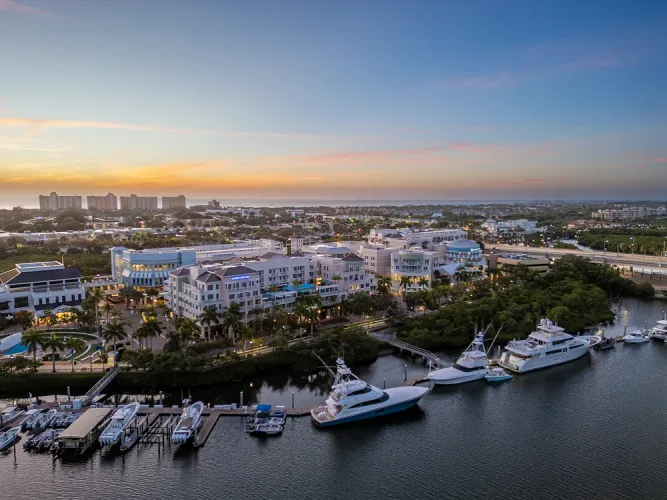
How to Become an FAA Part 107 Drone Pilot
This is the complete path from "I want to fly drones for money" to holding an FAA Remote Pilot Certificate: who actually needs one, the accounts and numbers the FAA requires, the knowledge test, the application, registering your aircraft, Remote ID, and staying current afterward. I wrote it as a working FAA Part 107 certified drone pilot who went through this process and now flies client work across North Florida. The regulatory claims in this guide are drawn from official FAA sources, linked at the bottom. Fees, portals, and procedures were checked against those sources in July 2026 — always confirm the details at faa.gov before you schedule or pay. Nothing in this guide is legal advice; it is one pilot explaining the map.
This Learning Center is independently created by JandyLucho Marketing and Media for educational purposes. It is not affiliated with, endorsed by, or sponsored by the Federal Aviation Administration (FAA) — not legal advice. FAA procedures and fees change; always confirm current requirements on the official FAA pages linked throughout. Last reviewed Jul 22, 2026.
This guide is now also an interactive course: 21 short lessons, knowledge checks, and a 60-question practice exam sim. Free, no account needed. Open the academy · Try the practice exam
In this guide:
- Who Actually Needs a Part 107 Certificate
- Eligibility: Who Can Get Certified
- Step 1: Create Your IACRA Account
- Step 2: Get Your FAA Tracking Number (FTN)
- Step 3: Study for the Knowledge Test
- Step 4: Schedule the Exam with PSI
- Step 5: Exam Day — What to Expect
- Step 6: Right After You Pass
- Step 7: Apply for the Certificate (Form 8710-13)
- Step 8: Temporary Certificate, Then the Real Card
- Step 9: Register Your Drone on FAADroneZone
- Step 10: Remote ID — Your Drone's License Plate
- Staying Current: The 24-Month Rule
- After Certification: Becoming a Working Pilot
- Frequently asked questions
Who Actually Needs a Part 107 Certificate
If you fly a drone under 55 pounds for any non-recreational purpose, you need a Remote Pilot Certificate under 14 CFR Part 107, the federal rule that governs small commercial drone operations. That word "non-recreational" is doing a lot of work, so let me unpack it. It covers paid client work, obviously. But it also covers flying to market your own business, shooting your own roof inspection company's jobs, and even volunteering drone services to a nonprofit for free.
The test is purpose, not payment. The FAA is explicit that compensation is not the single factor that decides whether a flight is recreational. Photographing a property to help it sell, inspecting a roof, donating footage to a charity: all of those count as non-recreational, whether or not a dollar changes hands. The agency's own guidance says it plainly: when in doubt, assume Part 107.
What about flying purely for fun? That falls under the recreational exception, and it requires a different, much lighter credential: the Recreational UAS Safety Test, or TRUST. TRUST is free, online, and once-and-done as long as you keep your completion certificate. But it authorizes exactly nothing commercial. Pass TRUST and then film a listing for a realtor friend, and the FAA treats that flight as non-recreational — TRUST does not cover it, favor or not.
So before you spend a minute studying: be honest about why you want to fly. If any part of the answer involves a business — yours or anyone else's — you are on the Part 107 path, and the rest of this guide is for you.
Eligibility: Who Can Get Certified
The FAA's bar for entry is low. You must be at least 16 years old to hold the certificate. You must be able to read, speak, write, and understand English. And you must be in a physical and mental condition to safely fly a drone.
That last one is a self-assessment. Unlike manned aviation, there is no aviation medical certificate required for Part 107, and nobody checks your eyesight or blood pressure. The FAA trusts you to know whether a condition would keep you from safely operating an aircraft, and expects you to ground yourself when it would.
No prior aviation experience is required. No flight hours, no instructor sign-off, no degree. The knowledge test is the gatekeeper, and real study time is what it asks of you — more on that below.
Step 1: Create Your IACRA Account
Your first real move happens at iacra.faa.gov. IACRA stands for Integrated Airman Certification and Rating Application. It is the FAA's web-based system for applying for pilot certificates and ratings of every kind, drones included: it checks your application data against the regulatory requirements, handles electronic signatures, and later becomes the place where you print your temporary certificate.
The site looks like it was built by the government, because it was. Do not let that rattle you. Create a profile as an applicant, fill in your legal name and personal details exactly as they appear on your government ID, and save your username and password somewhere you will find them again. You will come back to this system at least twice more in the process.
Watch the name field: the name on your IACRA profile needs to match the ID you will hand the test proctor. Pilots report that mismatches between "Bob" and "Robert" cause real headaches later. Use your full legal name from the start.
Step 2: Get Your FAA Tracking Number (FTN)
When you create your IACRA profile, the system assigns you an FAA Tracking Number, or FTN. This is your permanent identifier with the FAA — think of it as your student ID for everything airman-related. If you ever add other certificates down the road, they all hang off this same number.
Here is why the order matters: you cannot register for the knowledge test without an FTN. The testing vendor's system asks for it when you create your test-scheduling account. People regularly try to book the exam first, hit a wall, and then discover the IACRA step they skipped. Do it in the right order and the whole thing is painless: IACRA profile first, FTN in hand, then scheduling.
If you already hold any FAA airman certificate — say you are a private pilot adding a drone rating — you already have an FTN and can skip ahead. Everyone else: write the number down. You will type it several more times before this is over.
Step 3: Study for the Knowledge Test
The exam you are preparing for is officially called Unmanned Aircraft General – Small, code UAG. It is not a test about flying skill — nobody watches you fly. It is a test about whether you understand the airspace system you are about to share with manned aircraft.
The tested areas, per the FAA, include: Part 107 regulations themselves; airspace classification, operating requirements, and flight restrictions; aviation weather sources and how weather affects small drone performance; loading and performance; emergency procedures; crew resource management; radio communication procedures; physiological effects of drugs and alcohol; aeronautical decision-making; airport operations; maintenance and preflight inspection; and night operations. The airspace and weather material is where most new pilots spend the bulk of their effort, because reading sectional charts and METARs (coded aviation weather reports) is a genuinely new skill if you have never touched aviation.
The FAA gives you real study material for free. The Remote Pilot – Small Unmanned Aircraft Systems Study Guide (FAA-G-8082-22) is a free PDF on faa.gov and covers the tested content. The Airman Certification Standards (FAA-S-ACS-10B as of mid-2026; check faa.gov for the current revision) is the blueprint the test is built from: it lists every knowledge area the exam can touch. You also get free official UAG sample questions to see the question style before test day, and the FAA's own FAQ recommends reviewing all three before testing.
On study time: plan for two to four weeks of consistent evening study. Some knock it out in a focused week; some take two months at a casual pace. There is no prize for speed. The material you are learning — airspace, weather, decision-making — is the same material that keeps you out of trouble on real jobs later, so studying to understand it pays off twice.
You do not need a paid course to pass. The FAA's Remote Pilot Study Guide, the Airman Certification Standards, and the official sample questions are all free and cover the tested material. Paid prep courses are a legitimate convenience — structured lessons and practice exams save some people real time — but they are optional, not a requirement. I am not endorsing any vendor, and neither is the FAA.
Step 4: Schedule the Exam with PSI
The FAA does not run its own test centers. Its current airman knowledge testing vendor is PSI Services LLC, and you schedule the UAG exam through PSI's FAA portal at faa.psiexams.com. Creating your PSI account requires the FTN you picked up in Step 2, plus multi-factor authentication. The FAA's official "Schedule an Airman Knowledge Test" link points to that same portal, so if you arrive there from faa.gov, you are in the right place.
The fee, as of July 2026, is $175 per attempt, paid to PSI when you schedule — not to the FAA. That number is set by the vendor and has crept up over the years, so treat it as approximate and confirm the current amount at checkout on the PSI portal. If you fail and retake, you pay the full fee again, which is a decent financial argument for studying properly the first time.
Testing happens in person at an FAA-approved Knowledge Testing Center. The PSI portal shows you the centers near your ZIP code with available dates and times. Here in the Panhandle, that can mean a bit of a drive depending on where you live, so check locations before you assume there is a center in your town. Pick a date far enough out that your study plan finishes before it.
Step 5: Exam Day — What to Expect
The format, straight from the FAA's current testing matrix (as of mid-2026): 60 multiple-choice questions, a 2-hour time limit, and a minimum passing score of 70 percent. That is 42 correct out of 60. You can miss 18 questions and still walk out a future certificate holder — worth remembering when a weird question rattles you mid-exam.
Bring valid, current identification. The FAA requires ID showing a photo, your date of birth, your signature, and your physical residential address — a standard driver's license covers all four for most people, and the information can be split across more than one document if needed. A P.O. box does not satisfy the address requirement. Your FTN is already tied to your booking, so the ID is really the one thing you cannot forget. No instructor endorsement or proof of training is required — you just show up as yourself.
The chart-heavy questions reference figures from a booklet called FAA-CT-8080-2H, the Airman Knowledge Testing Supplement. The testing center provides it during the exam, and it is also free on faa.gov beforehand — studying from the actual supplement means the exam figures look familiar instead of foreign.
From someone who sat in that chair: the two-hour limit is generous. Flag the questions that stump you, answer everything else, and come back. Nobody ever asks your score afterward — a 71 and a 98 print the same certificate. And if the worst happens and you fail, the FAA makes you wait 14 calendar days, you pay the fee again, bring your failed test report to the retake, and try again. It is a setback, not a verdict.
Step 6: Right After You Pass
You leave the testing center with an Airman Knowledge Test Report. Guard this document. It carries your 17-digit Knowledge Test Exam ID, which you will need for the certificate application — and if you missed any questions, the report lists ACS codes telling you which knowledge areas they came from. Review them; those are your weak spots heading into real flying.
Before you rush to the next step, know that the FAA notes it may take up to 48 hours from your test date for the result to appear in their application system. If IACRA cannot find your exam ID the same afternoon you passed, nothing is wrong. Give it a day or two.
To state it plainly: passing the test does not yet let you fly commercially. You are certified when the FAA says you are certified, which happens a few steps from now. Sit tight.
Step 7: Apply for the Certificate (Form 8710-13)
Now you go back to IACRA — same account, same FTN — and complete FAA Form 8710-13, the Airman Certificate and/or Rating Application, electronically. At the time of writing, the workflow is: choose Application Type "Pilot," then Certification "Remote Pilot," enter your 17-digit Knowledge Test Exam ID, review, and sign electronically. The form numbers and menus are the kind of procedural detail the FAA occasionally shuffles, but the shape of the process has been stable for years.
After you submit, the TSA takes over for a while. Every applicant goes through a TSA security background check — formally a Security Threat Assessment — before the FAA will issue a certificate. There is nothing for you to do during this stage except wait; it runs off the identity information already in your application.
When the vetting clears, the FAA sends a confirmation email. That email is your green light, and it contains the instructions for the next step.
- Log back in to IACRA with your existing account and FTN.
- Start a new application: Application Type "Pilot," Certification "Remote Pilot" (Form 8710-13).
- Enter the 17-digit Knowledge Test Exam ID from your test report (allow up to 48 hours after testing for it to appear).
- Review, sign electronically, and submit.
- Wait for the TSA Security Threat Assessment to complete and the FAA confirmation email to arrive.
Step 8: Temporary Certificate, Then the Real Card
The confirmation email includes instructions for printing a temporary remote pilot certificate directly from IACRA. That printout is a real, legal certificate — the day you print it, you can fly paid work. As of July 2026, the FAA says applications should be validated within about 10 days of submission, and the temporary certificate is good for 120 days.
The permanent card comes by U.S. mail once the FAA finishes its internal processing, and the FAA states it will arrive within that 120-day temporary window. It is a plastic card that looks a lot like a driver's license and feels disproportionately satisfying for something earned with multiple-choice questions.
From the day you print that temporary certificate, you are an FAA-certified drone pilot. But you are not quite ready to fly a job, because your aircraft has its own paperwork — and that is the next step people most often skip.
Step 9: Register Your Drone on FAADroneZone
Every drone you fly under Part 107 must be registered — regardless of weight. The famous under-250-gram registration exemption applies only to recreational flying, not to commercial work. Your 249-gram mini that flew unregistered for fun needs a registration number the moment it flies for business.
Registration happens on the FAA's FAADroneZone portal (faadronezone.faa.gov), and for Part 107 it is per-aircraft: each drone gets its own registration and its own number, unlike recreational registration where one number covers everything you own. You will need your address, email, phone, the drone's make and model, its Remote ID serial number if applicable, and a card for payment. The fee is currently $5.00 per aircraft, and each registration lasts three years before it needs a $5 renewal.
Two follow-through items the FAA is picky about. First, the registration number must be legibly displayed on an external surface of the drone before it flies — engraving, a permanent label, or plain permanent marker all count, as long as it is visible on the outside and stays legible. Second, you must have the registration certificate (paper or digital) in your possession during flight operations and show it to law enforcement on request.
A trap that catches people: under current FAADroneZone rules, registrations do not transfer between operation types. A drone registered under the recreational exception cannot fly on that registration commercially — it needs its own separate Part 107 registration. Five dollars is cheap insurance against an awkward conversation.
Step 10: Remote ID — Your Drone's License Plate
Remote ID (14 CFR Part 89) requires your drone to broadcast identification and location information while it flies — a signal that the FAA, law enforcement, and anyone with a receiver can pick up. The easiest way to think about it: a digital license plate that transmits.
There are three ways to comply. Option one: fly a Standard Remote ID drone with the broadcast capability built in. Most recent consumer drones ship with this — confirm your specific model on the FAA's accepted Declaration of Compliance list — and the broadcast includes the drone's ID, its position and altitude, its velocity, the control station's location, a time mark, and an emergency status. Option two: strap an FAA-accepted Remote ID broadcast module onto an older drone. The module broadcasts slightly less (takeoff location instead of control-station location, no emergency status), and it carries two real restrictions. Part 107 already requires keeping the drone in visual line of sight, but a module locks that in for good — no BVLOS waiver is possible with one. And if the module stops broadcasting mid-flight, you must land as soon as practicable.
Option three: fly with no Remote ID equipment at all, which is legal only inside an FAA-Recognized Identification Area (FRIA) — designated sites, typically run by flying clubs and schools — with both you and the drone staying inside the boundary for the whole flight and the drone kept within your visual line of sight. For working commercial pilots, FRIAs rarely figure into real jobs. In practice: buy a Standard Remote ID drone, confirm the serial number is entered in your FAADroneZone registration, and move on.
Flying a Part 107 operation without required Remote ID is a violation. The FAA's discretionary-enforcement grace period ended March 16, 2024 — since then, the FAA says non-compliant operators can face fines and certificate suspension or revocation. Verify your Remote ID status before your first paid flight, not after someone asks.
Staying Current: The 24-Month Rule
Getting certified is not the end of your relationship with FAA training. Under 14 CFR 107.65, you cannot exercise Part 107 privileges unless, within the previous 24 calendar months, you have passed the initial knowledge test or completed the FAA's recurrent training. In plain terms: every two years, you refresh.
The good news is that the refresh is free and online. Part 107-only pilots currently take course ALC-677, "Part 107 Small UAS Recurrent," on faasafety.gov. This replaced the old system where recurrency meant paying for another proctored test at a testing center — since April 2021, currency costs you an evening on the couch. Keep the completion certificate it generates; that document is your proof of currency if anyone asks.
The recurrent training also matters for night flying. Part 107 pilots can fly at night without a waiver, but only if they completed the initial test or recurrent training after April 6, 2021 (when the night provisions entered the curriculum) and the drone carries anti-collision lighting visible for at least 3 statute miles with a flash rate sufficient to avoid collision — lighting that is also required during civil twilight flights. If you certified before that date, the current free online course brings you up to night eligibility.
And if you let your 24 months lapse? Nothing dramatic. The certificate itself never expires — it stays valid unless surrendered, suspended, or revoked. You simply cannot fly commercially until you complete the free online training again. No re-exam, no fee, no penalty. Take the course, print the completion certificate, and you are back in business the same day.
After Certification: Becoming a Working Pilot
The certificate makes you legal. Turning legal into good, and good into hireable, takes more than paperwork. Here is what closed that gap for me.
Get insured. No FAA rule forced me to carry liability insurance, but flying client work without it is a risk I would not take — and many clients, real estate brokerages especially, ask for proof before anyone flies. I carry drone liability insurance and can produce a COI on request — the carrier-issued one-page proof that coverage exists. If you want to work, expect the same question.
Learn your local airspace before a client is waiting on you. Under 14 CFR 107.41 you need ATC authorization before flying in Class B, C, or D airspace or in surface-area Class E around an airport, and the LAANC system (Low Altitude Authorization and Notification Capability) grants most of those authorizations in near-real time through FAA-approved apps, at or below the altitudes on the FAA's facility maps. Around here that knowledge is not optional — a surprising amount of the Panhandle sits under controlled or military airspace, and knowing what you can fly, where, and at what ceiling is half the job.
Then build real skills on your own dime before you charge anyone. Fly the boring reps: smooth orbits, controlled reveals, consistent exposure. My first paid aerial photography jobs were only possible because of hours of unpaid practice, and the harder stuff — like the FPV fly-through work I do now — sits on top of a lot of that foundation.
One more pointer: readers evaluating a pilot they might hire — instead of getting certified themselves — will get more from the companion piece on vetting a drone pilot in the Panhandle: verifying a certificate, checking insurance, and the questions worth asking before anyone flies.
Keep going
Hiring a Drone Pilot in the Panhandle
The buyer-side companion: how to verify a pilot’s certificate, insurance, and airspace competence before you hire.
Drone & Aerial Photography Services
What certified, insured aerial work looks like when it’s done for a living — our drone and aerial service.
Frequently asked questions
Budget roughly one to two months for most people. Study is the biggest variable — plan on two to four weeks of consistent evening study. After that: the IACRA account and FTN take minutes, scheduling depends on test-center availability near you, your exam result can take up to 48 hours to appear in IACRA, and the FAA says applications should be validated within about 10 days, at which point you can print a temporary certificate and legally fly. The permanent card follows by mail within the temporary certificate's 120-day window.
It is a real exam, and it rewards steady study — no aviation background required. You need 70 percent: 42 correct out of 60 multiple-choice questions in 2 hours, and the time limit is generous. The genuinely new material for most people is reading sectional charts and aviation weather reports; the regulations portions are mostly memorization. Study the FAA's free Remote Pilot Study Guide and the official sample questions until the question style feels familiar — that is the best preparation there is. If you do fail, you wait 14 calendar days and can retake it.
About $180 in required fees: $175 for the UAG knowledge test, paid to the testing vendor PSI (confirm the current amount when you schedule), plus $5 per drone for a three-year registration. The FAA charges nothing for the certificate itself, and the recurrent training that keeps you current every 24 months is free on faasafety.gov. Paid prep courses are optional — the FAA's free study guide, certification standards, and sample questions cover the tested material. Budget extra only for a retake if you fail, and for liability insurance if you plan to fly client work.
No. Any non-recreational flight — paid or unpaid — requires a Remote Pilot Certificate, and you do not have one until you have passed the UAG exam, submitted the IACRA application, cleared the TSA background check, and printed at least the temporary certificate. There is no learner's-permit stage for commercial drone work, and being partway through the process does not authorize anything.
The certificate itself never expires — it stays valid unless it is surrendered, suspended, or revoked. What does lapse is your currency: under 14 CFR 107.65 you must have passed the initial test or completed FAA recurrent training within the previous 24 calendar months to exercise your privileges. If you lapse, you simply complete the free online recurrent training on faasafety.gov and you are current again — no re-exam, no fee.
No. Purely recreational flying falls under the recreational exception, which requires the free online TRUST test instead. But the category turns on why you are flying: photographing a property to help sell it, inspecting a roof, or volunteering footage to a nonprofit all count as non-recreational and require Part 107, even when no money changes hands. The FAA's own guidance: when in doubt, assume Part 107.
Official sources
Every regulatory statement in this guide traces to the FAA. Start here:
- FAA — Become a Drone Pilot (official Part 107 process) ↗
- FAA IACRA — Integrated Airman Certification and Rating Application ↗
- FAA — Airman Knowledge Testing Matrix (UAG test specs) ↗
- FAA — Remote Pilot Study Guide (FAA-G-8082-22, free PDF) ↗
- FAA — Register Your Drone (FAADroneZone) ↗
- FAA — Remote Identification of Drones ↗
- FAASafety.gov — Part 107 Small UAS Recurrent training (ALC-677) ↗
Become a Pilot —
Or Hire One
Work through the steps above and you will know exactly what stands between you and the certificate I carry. And if you would rather skip the study guides and just get the footage, that is literally my job — I fly real estate, FPV fly-throughs, and construction projects across Tallahassee and the North Florida Panhandle as an FAA Part 107 certified, insured drone pilot. Either way, welcome to the airspace.
Get a Free Quote